Architecture is not just something we see.
It is something we feel.
Ever wondered why some places make you feel calm and others make you uneasy…
Nothing shapes human experiences more than Architecture, often described as the art of building, it is at its core a living experience. Every wall, every opening, every material choice influences how a person feels within a space. Unlike other art forms, architecture is not observed from a distance it is inhabited. It surrounds us, directs us, and quietly shapes our emotions, behaviors, and memories.
Long before we understand a building, its plans, its sections, its materials; we respond to it emotionally. It can slow you down, or rush you through. And that is where architecture becomes more than design—it becomes an experience.
Table of Contents
ToggleThis is why empathy is not optional in architecture; it is essential.
To design with empathy means to go beyond function and aesthetics. It requires an understanding of human psychology, of comfort and anxiety, of belonging and alienation. When an architect designs a space, they are not merely arranging forms—they are anticipating how a person will move, pause, reflect, heal, or connect within that environment.
Empathy in architecture begins with a simple question:
How will someone feel here?
Not how it will look on a sheet. Not how it will photograph.
But how it will live.

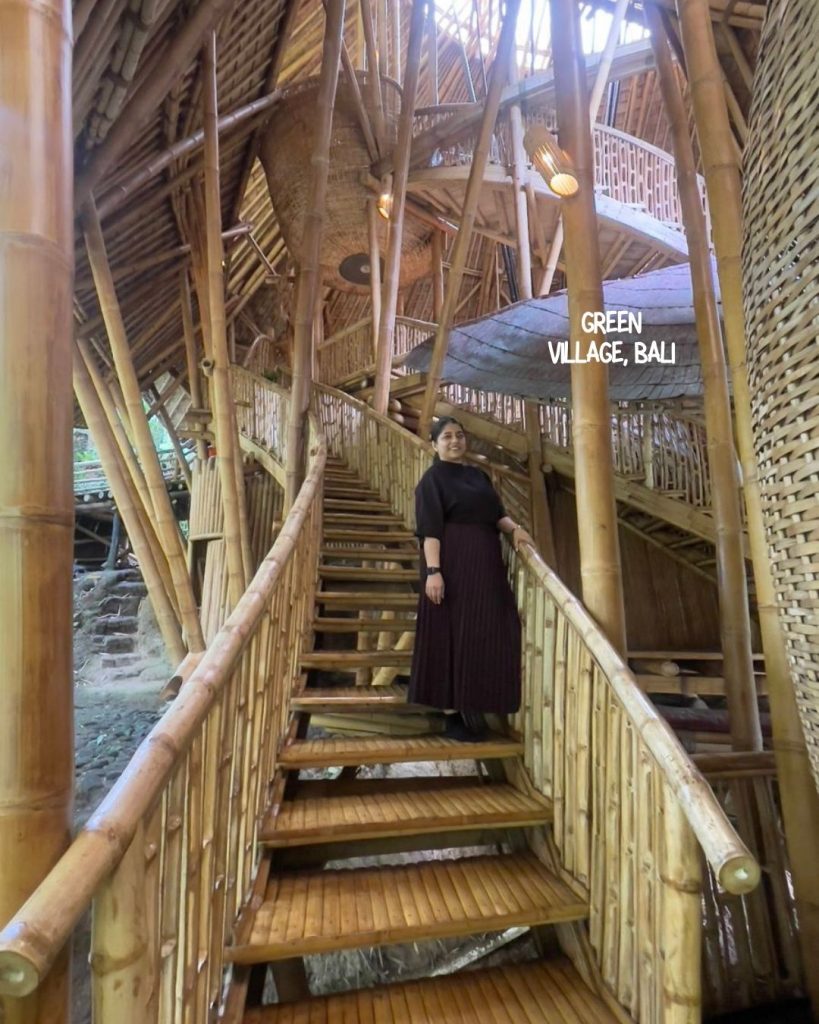
Architecture as a Quiet Conversation
Every built space holds a conversation between itself and the person inside it.
The built environment has a profound impact on the human mind.
Scale determines whether a person feels empowered or diminished. The height of a ceiling can make you feel small or held.
Light shapes mood. Entering from a narrow slit can create calm, while harsh artificial glare can exhaust you.
Material communicates texture and warmth. They carry memory stone feels grounded, wood feels warm, concrete can feel honest or cold depending on how it is used.
Color subtly affects perception; cool tones may calm, while warm tones energize.
Even silence in architecture should be designed.
Architecture, therefore, becomes a psychological medium – different from any other art form. It does not simply shelter the body; it speaks to the mind rather shape it!
The examples below shed a light of various ways to ground architecture.. building that have moved me inside out…Â
Designing for Vulnerability: Aga Khan University Hospital
You understand empathy most clearly in spaces where people are at their most vulnerable.
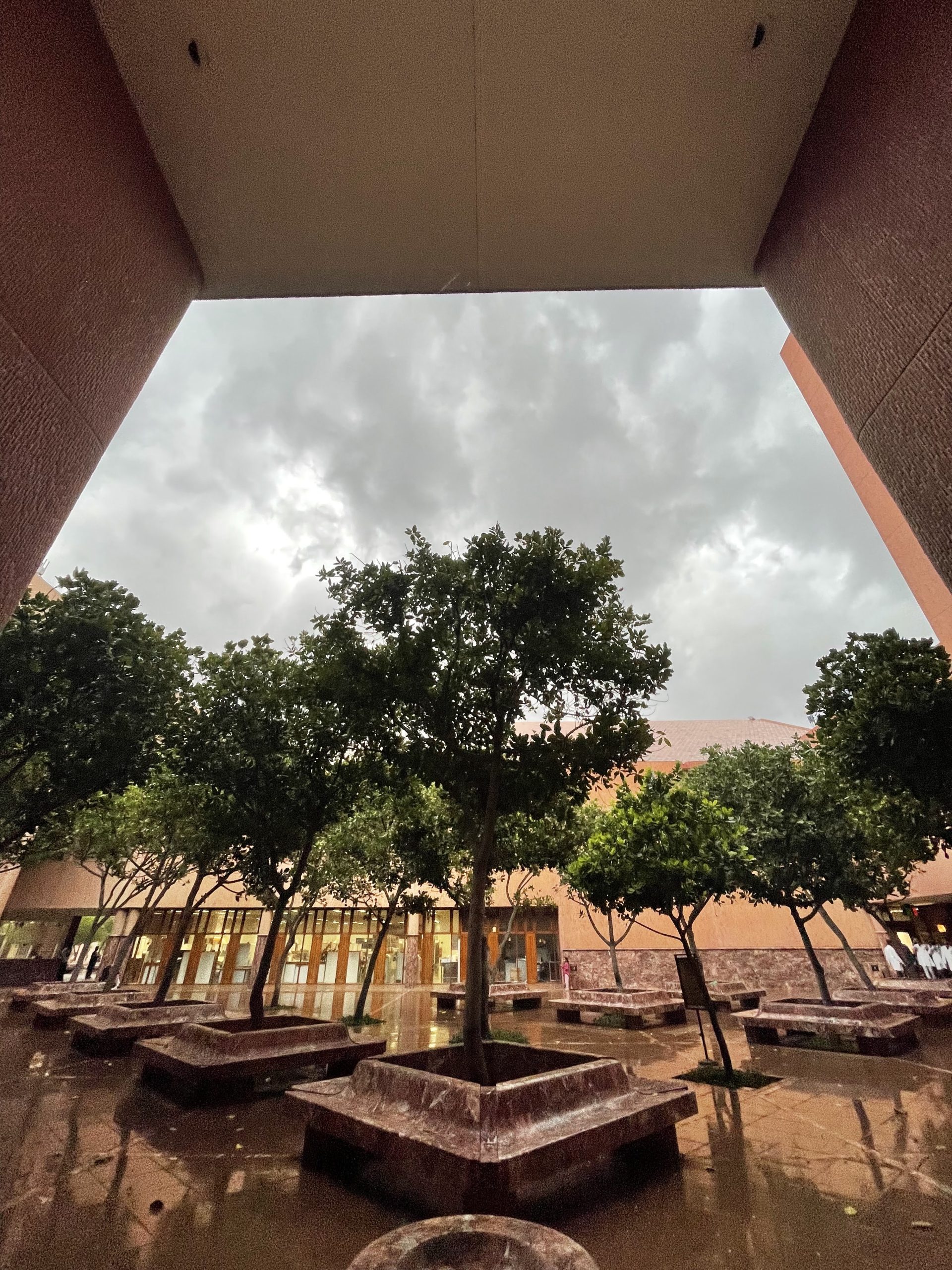
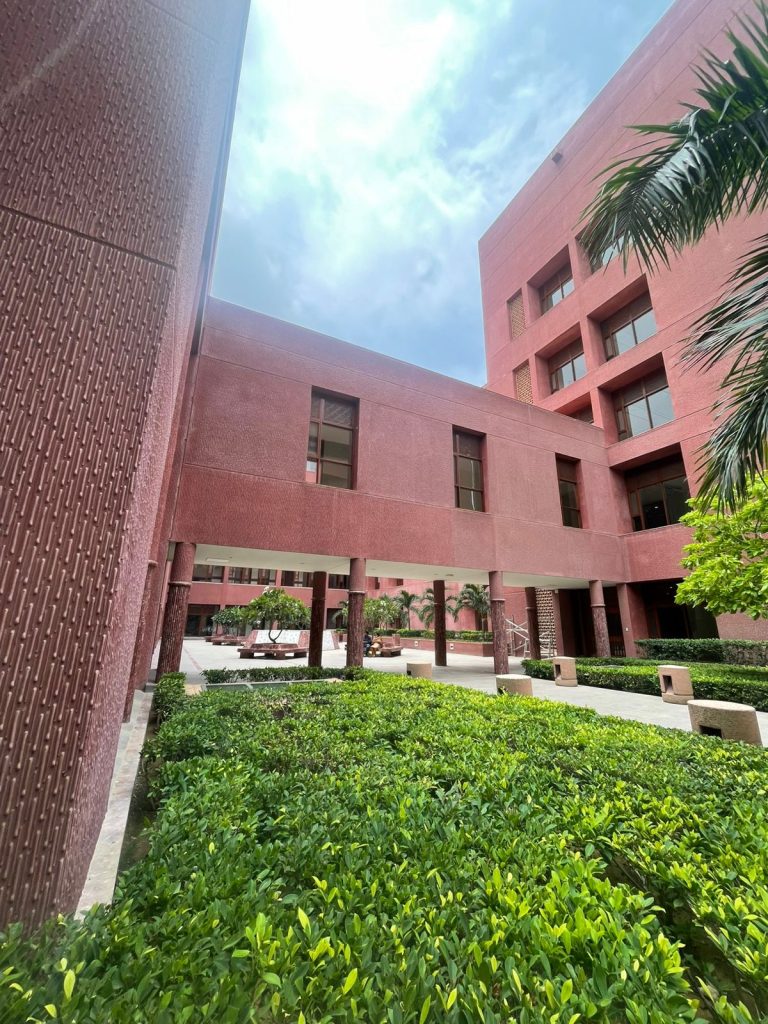
If there’s one building, I keep going back to whenever I think about grounding architecture – it’s the Aga Khan University Hospital (AKUH) in KarachiÂ
An empathetic approach acknowledges these emotions and seeks to soften them. At AKUH, the use of landscaped courtyards, controlled natural light, and clear spatial organization helps create a sense of calm and orientation. Instead of feeling lost in an institutional maze and the blasting 5000k white light and white washed corridors that hospitals are often synonyms to, the building grounds you with warm colors, cultural elements embedded within building material, reflecting pools, shifting scales – weeping plaster that breaks the reflection of harsh sunlight.
Hospitals carry anxiety, uncertainty, waiting. But here, architecture softens that weight.
There is clarity in how you move.
There is light where you need reassurance.
There are pauses courtyards, greens, moments to breathe.
The building does not try to impress you.
It tries to care for you.
And that changes everything.
Becoming Part of the Landscape: Kandalama
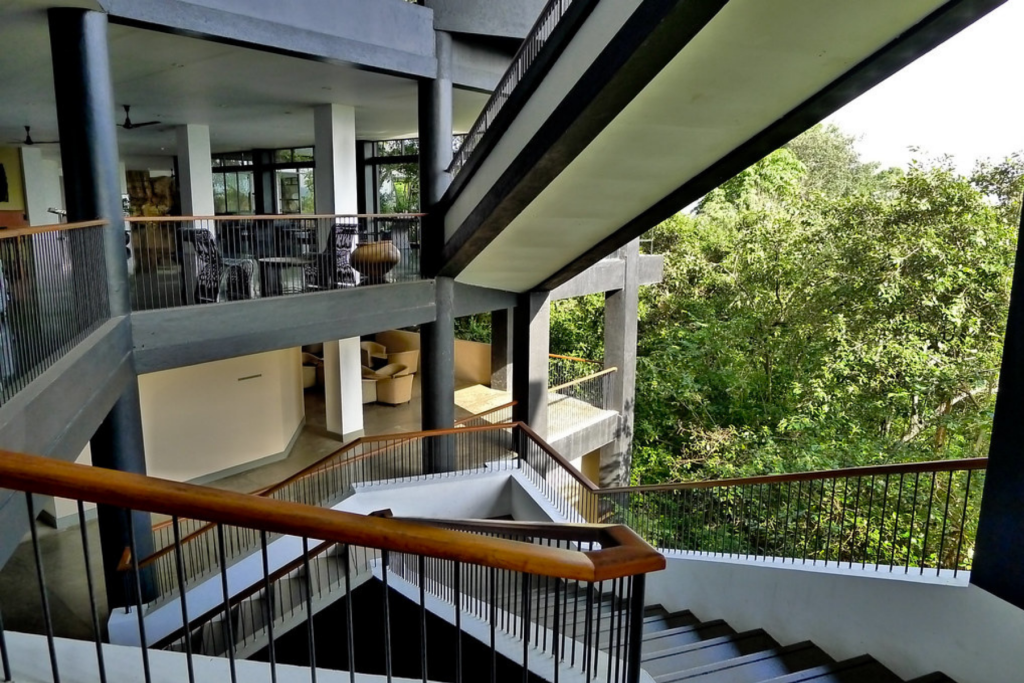
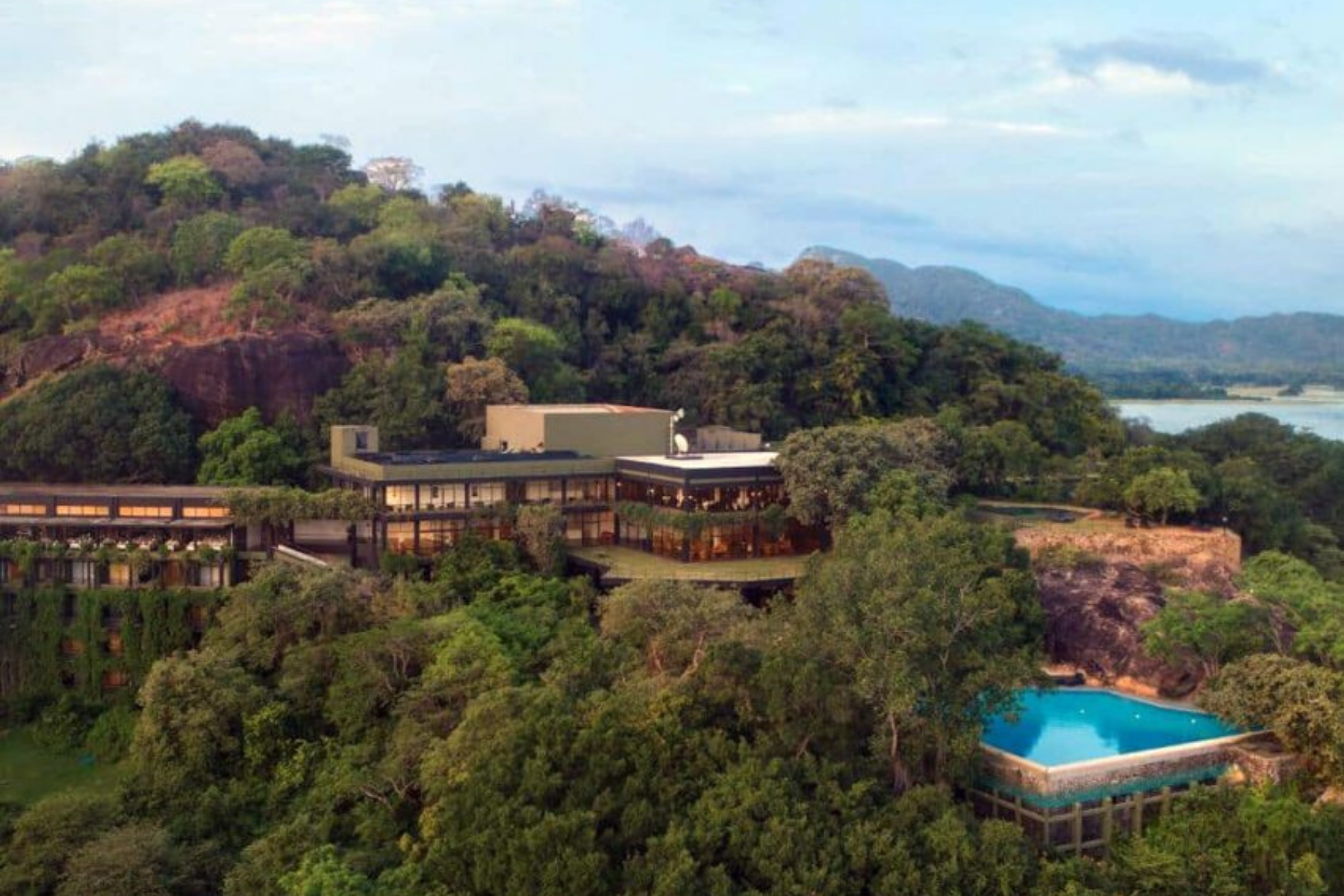
At Heritance Kandalama, designed by Geoffrey Bawa, empathy takes another form – – humility.
This project exemplifies empathy not only toward people but also toward the landscape.
Rather than dominating its surroundings, the building merges into them. Covered in vegetation and carefully embedded into the terrain, it almost disappears into the natural environment. The architecture respects the site, allowing nature to remain the primary experience. The most wholesome part of design is that it lends itself to surrounding and at almost every corner you’re welcome by the native monkeys, the building doesn’t separate them but merges with them. Caution here: Never feed those monkeys – ever!!!
The building stretches into the cliff, covered in green, almost disappearing into its surroundings.
It does not dominate the landscape.
It listens to it.
And as a visitor, you feel that.
You don’t arrive at a building you arrive at a feeling of belonging.

When Architecture Becomes the Exhibit: Museums of Emotion
Some of the most powerful examples of empathetic architecture are museums where the building itself becomes an emotional journey.
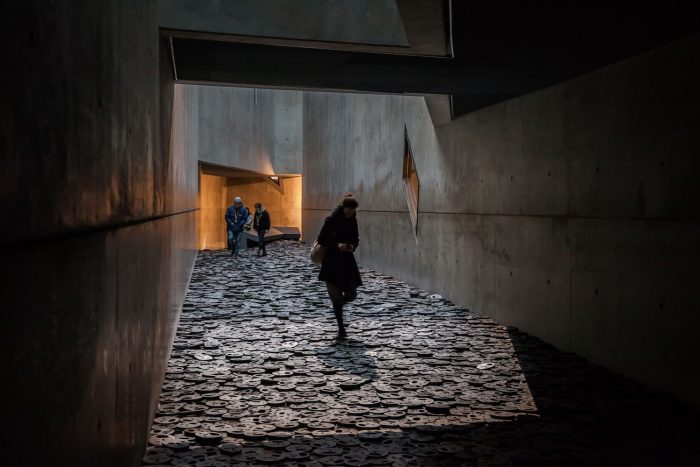
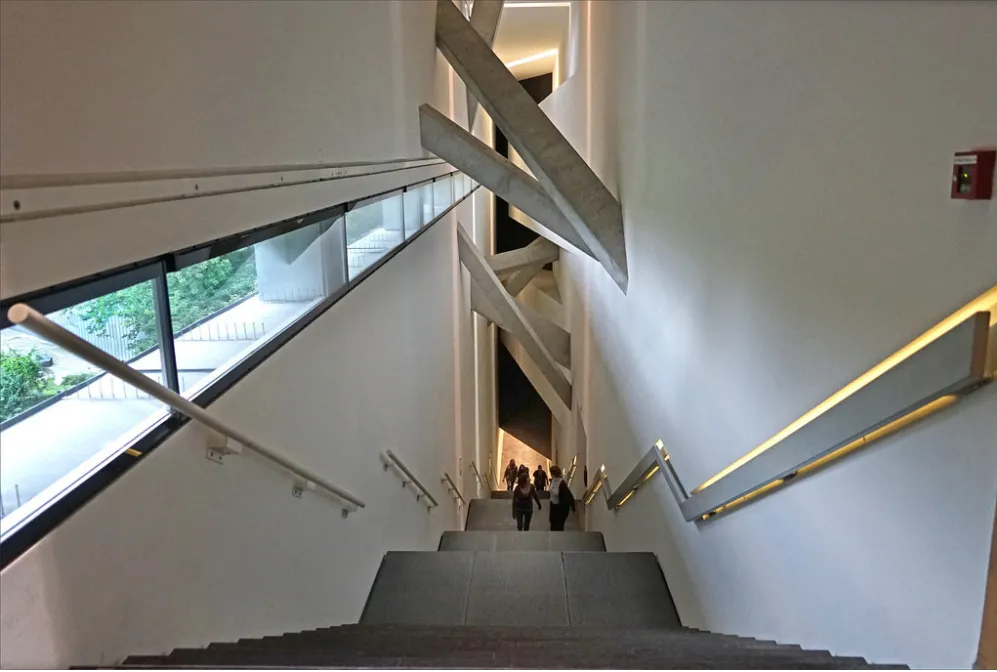
At the Jewish Museum Berlin by Daniel Libeskind, architecture is not a container for history it is the story.
Sharp angles, disorienting axes, and voids cut through the building.
You don’t just learn about loss and absence.
You feel it in your body.
The famous Holocaust Tower is cold, tall, and almost empty—except for a thin slit of light above.
It creates silence; And in that silence, architecture speaks.
At the National Museum of African American History and Culture, designed by David Adjaye, the journey is carefully choreographed.
You begin underground: compressed, darker spaces that carry the weight of history.
And as you rise, light begins to appear. Spaces open. Air returns.
It is a spatial narrative.
A movement from pain to resilience.
And then there is the Louvre Abu Dhabi by Jean Nouvel.
Here, the architecture is almost quiet, just white walls, restrained, minimal, almost disappearing into the background.
But above you, everything changes.
A vast mashrabiya-inspired dome filters sunlight into what feels like a gentle rain of light.
Shadows shift slowly across surfaces. Water reflects the white walls, doubling the space, softening its edges.
You don’t just walk through galleries.
You walk through light, reflection, and stillness.
There is a calm here.
A pause.
The kind that makes you slow down without realizing it.
The kind that makes you feel present.
In all these spaces, architecture is no longer a backdrop.
It becomes the exhibit itself.
Not something you look at –
but something you experience.
The Human Scale of Modern Architecture
In today’s fast-growing cities, empathy often gets lost in scale.
Contemporary architecture increasingly recognizes the importance of human-centered design. Architects today are exploring how spaces can support mental health, social interaction, and inclusivity.
Empathetic architecture in the modern context often includes:
- Spaces that encourage community and interaction rather than isolation
- Designs that prioritize accessibility and inclusivity
- Use of natural elements—light, air, greenery—to improve well-being
- Attention to sensory experience, including acoustics, texture, and visual comfort
Projects that embrace human scale and psychological awareness tend to feel intuitive. They do not overwhelm the user but instead guide them gently, making spaces easier to understand and more comfortable to inhabit.
But the most meaningful contemporary architecture brings us back
to human proportion, to sensory experience, to emotional awareness.
Spaces that don’t overwhelm.
Spaces that don’t confuse.
Spaces that allow you to feel present.
Because architecture is not just about efficiency.
It is about how life unfolds within it.

Material, Colour, and the Psychology of Space
The smallest decisions often leave the deepest impact.
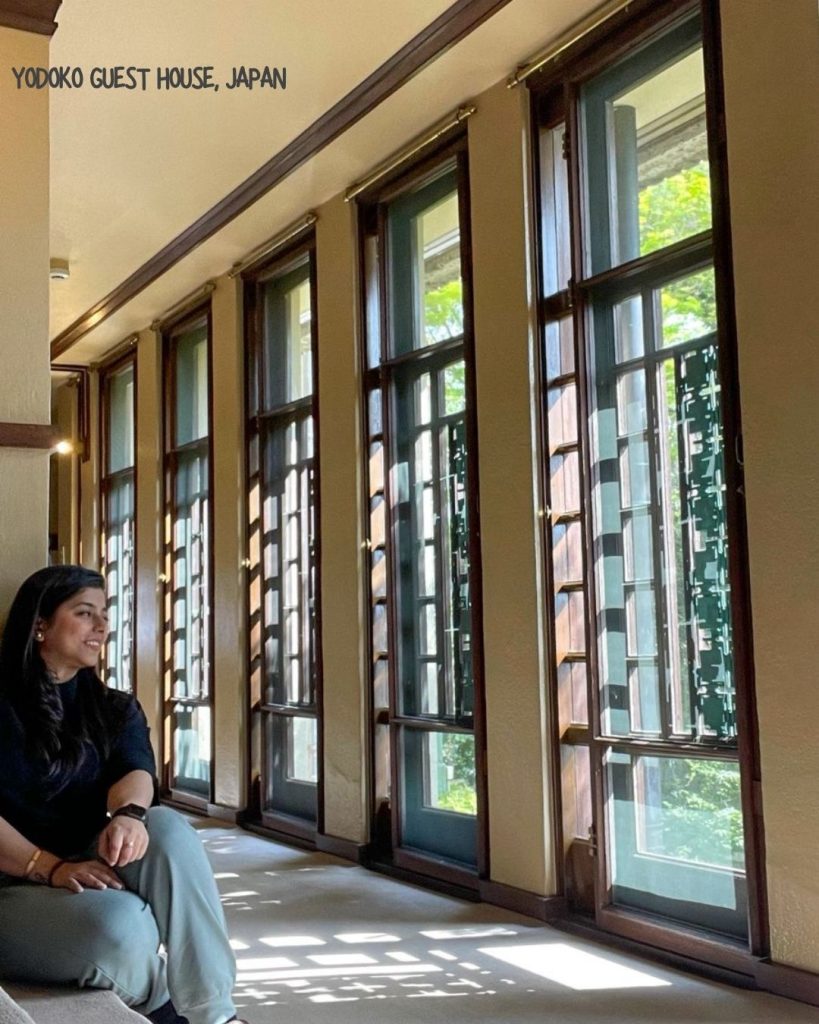
Material and color are not merely aesthetic decisions they are emotional tools. The tactile quality of materials influences how people physically and psychologically engage with a space. Rough textures may feel raw and honest, while smooth finishes may feel refined but distant.
Color, similarly, can transform perception:
- Soft, neutral tones create calm and stability
- Bright colors can energize and stimulate
- Dark tones may evoke introspection or heaviness
Even minimal design often associated with simplicity can have varying emotional effects. When thoughtfully executed, it creates clarity and peace. When stripped too far, it can feel cold and impersonal.
A warm material can make you stay longer.
A harsh light can make you leave sooner.
A soft tone can quiet the mind.
Even minimal design is not about emptiness.
It is about clarity.
Because people don’t remember drawings.
They remember how a place made them feel.
Empathy lies in finding the balance.

Architecture That Stays With You
Some spaces stay with you long after you leave.
Not because they were iconic.
But because they understood something about being human.
Architecture is the only art form that people cannot easily escape. It shapes daily life in subtle but powerful ways. Because of this, architects carry a profound responsibility not just to build efficiently, but to build thoughtfully.
Empathy in architecture means designing with awareness: awareness of human emotion, of cultural context, of environmental impact. It means asking not just “How will this look?” but “How will this feel?”
The most impactful buildings are not always the most visually striking. They are the ones that resonate with people spaces that comfort, inspire, and remain in memory long after one has left them.
In the end, empathetic architecture is not about grand gestures. It is about understanding people, and quietly designing spaces that make their lives better.

That is empathy in architecture.
And maybe that is what my platform – Qasasul Safar is really about
not just traveling to see buildings,
but to experience how they hold emotion, memory, and meaning.
Because in the end,
the best architecture is not the one you admire.
It is the one you carry with you.
Follow us on your favorite platform