

Mehrabpur is a small city in Naushahro Feroze District in Sindh, Pakistan, approximately an hour away from Sukkur. For decades, Green Crescent Trust (GCT) has been running makeshift schools here—scattered across the city, adapting to available spaces, and growing as capacity allowed. In 2020, a generous land donation opened the possibility for something transformative: a purpose-built school to bring together all current and future students under one roof.
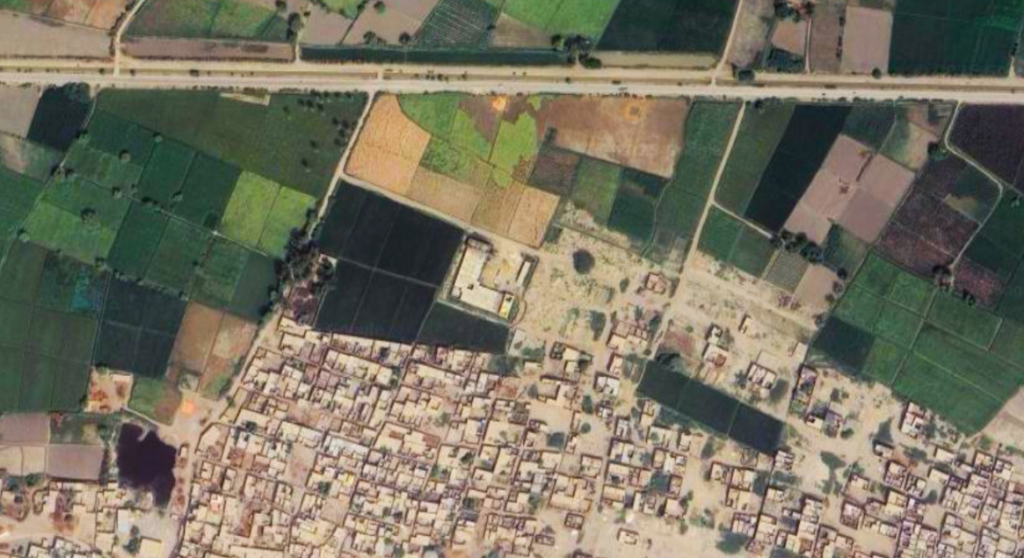
The site, previously farmland, sits between fields on three sides and a settlement on one, accessible by a dirt track linking to the main road just a few meters away. Nearly a perfect square, it provided an opportunity to both integrate with its rural setting and stand out as a landmark—the first ever purpose-built school in Mehrabpur. Our intent was to create not just a functional building, but a meaningful place of navigation, inspiration, and identity for the city.
The Design
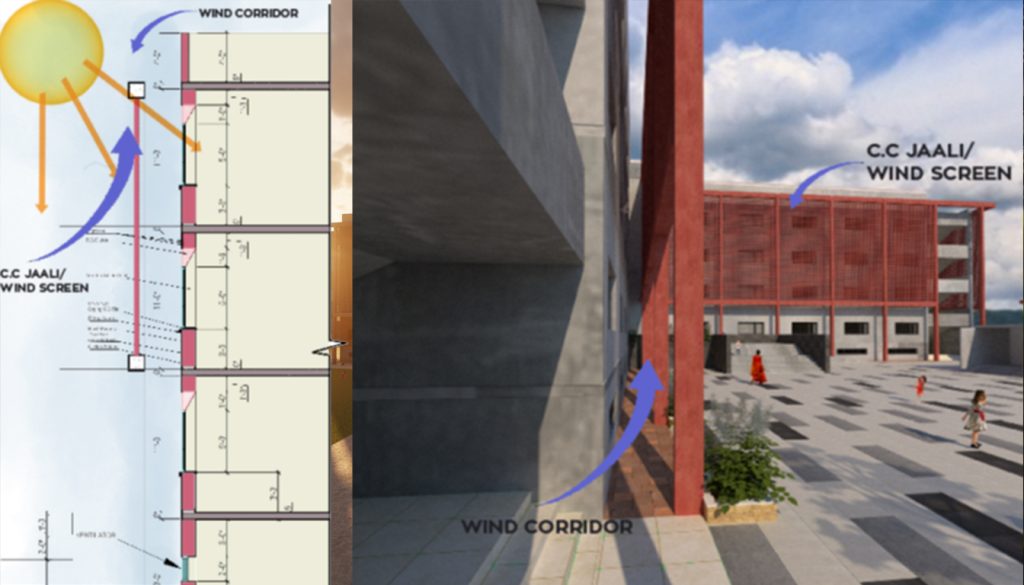
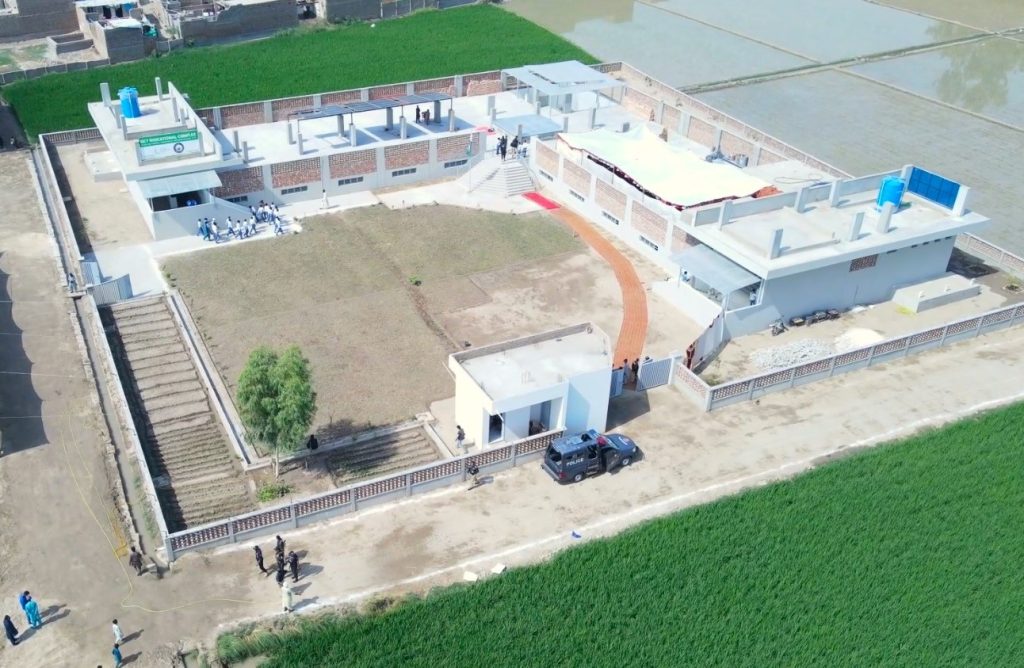
The design rests on a modular grid with two wings united by a central core. This core, housing circulation and a ramp, ensures accessibility for all while also acting as the dividing spine between the girls’ and boys’ sections. It doubles as a channel for wind movement, supporting natural ventilation across the building.
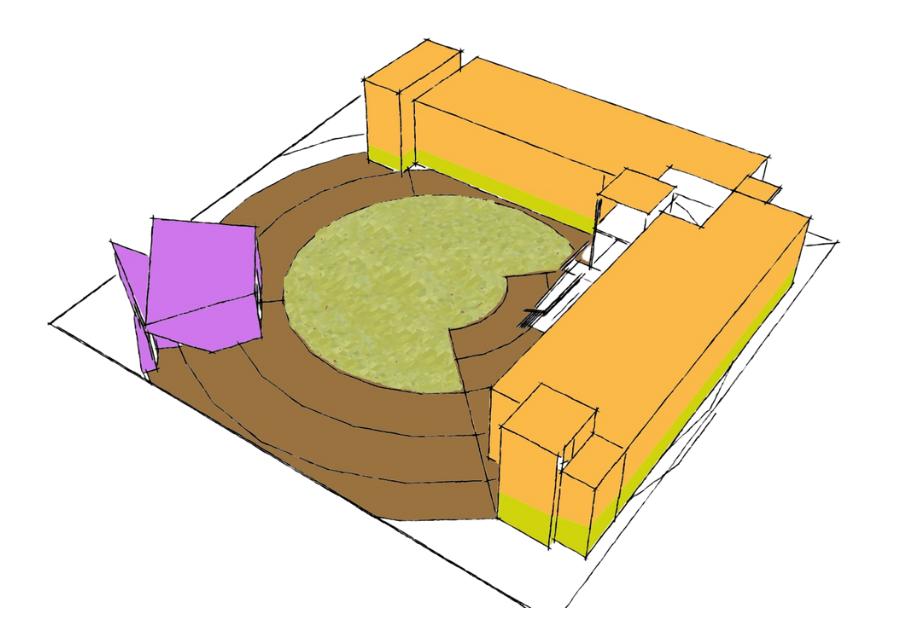
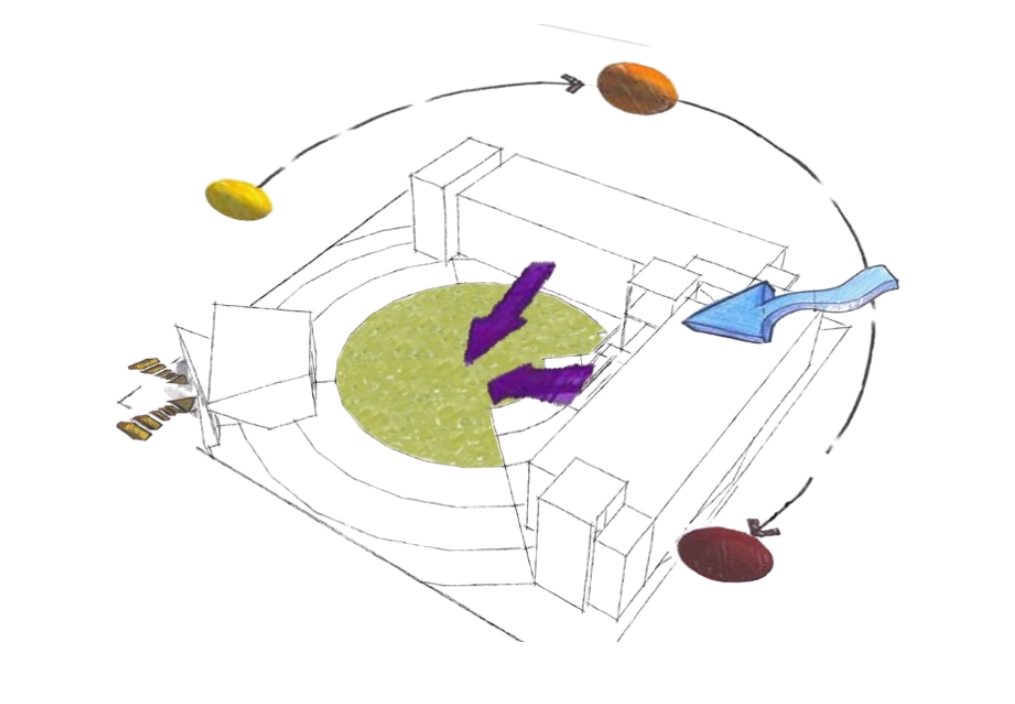
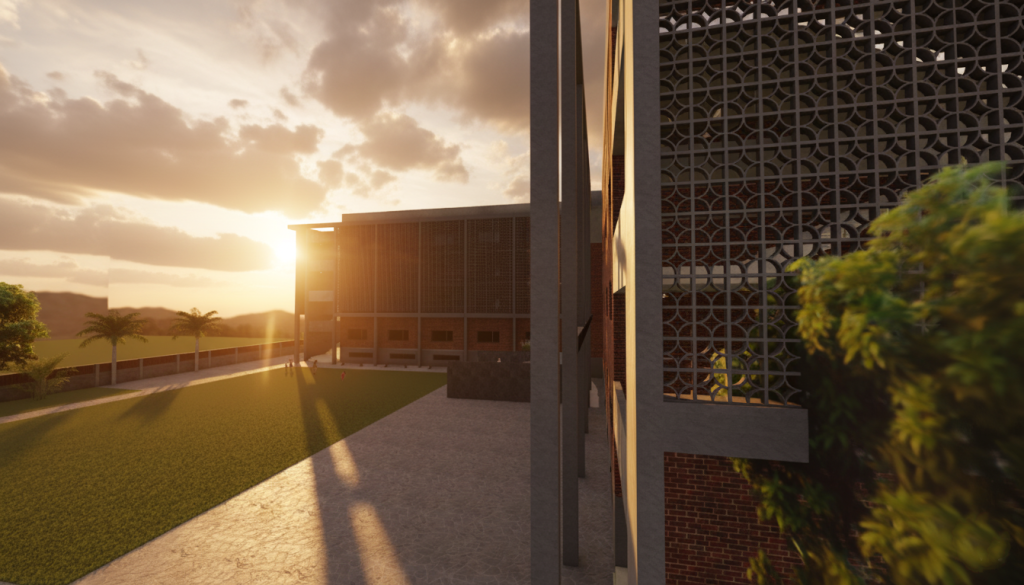
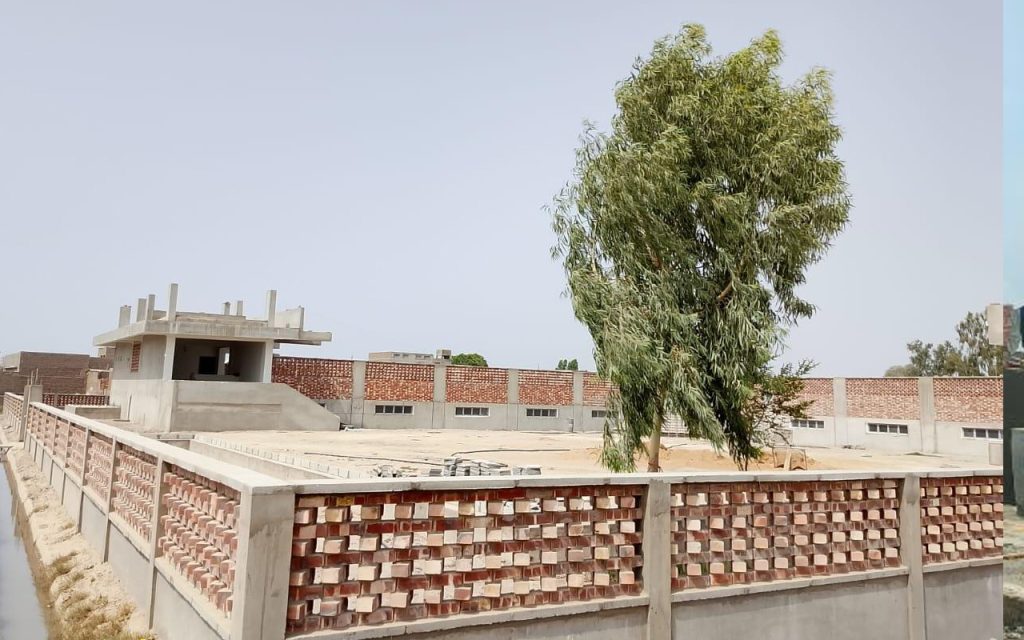
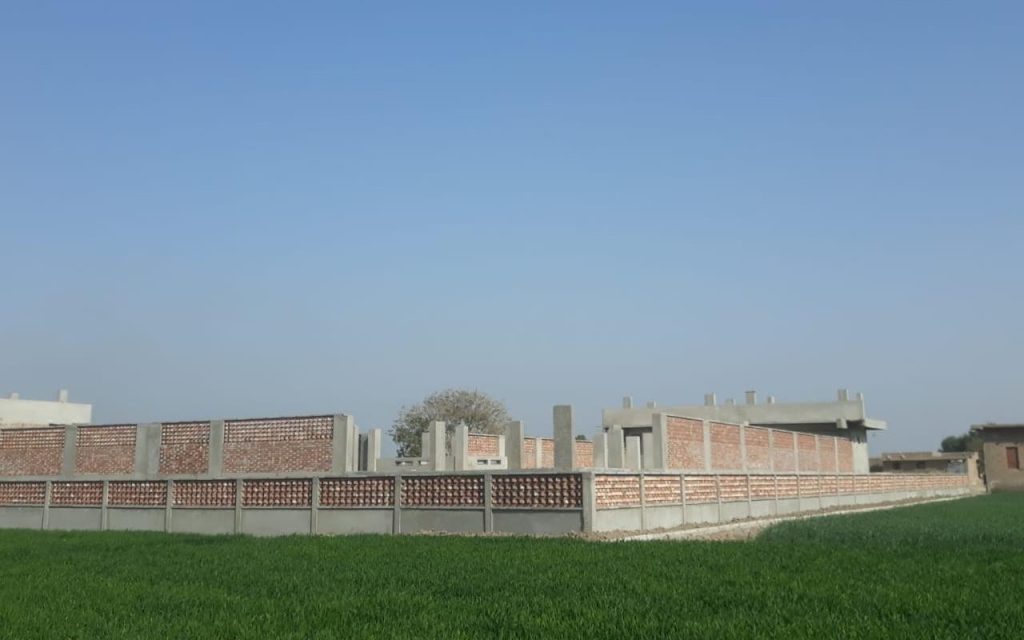
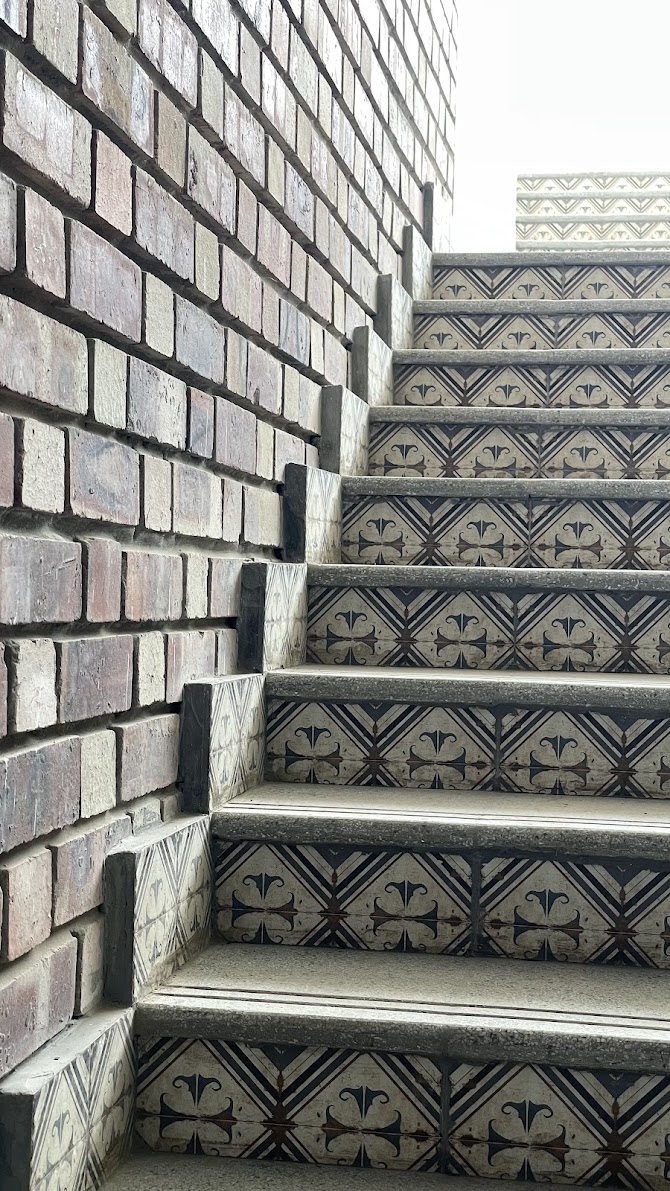
Structurally, the school follows a typical column-and-frame system, with exposed brick walls and concrete finishes. From the first floor upwards, the façade is wrapped with a concrete jali. This jali acts as both barrier and filter: shielding against the harsh summer sun while allowing diffused light and ventilation—a contemporary interpretation of the brise-soleil.
Table of Contents
Toggle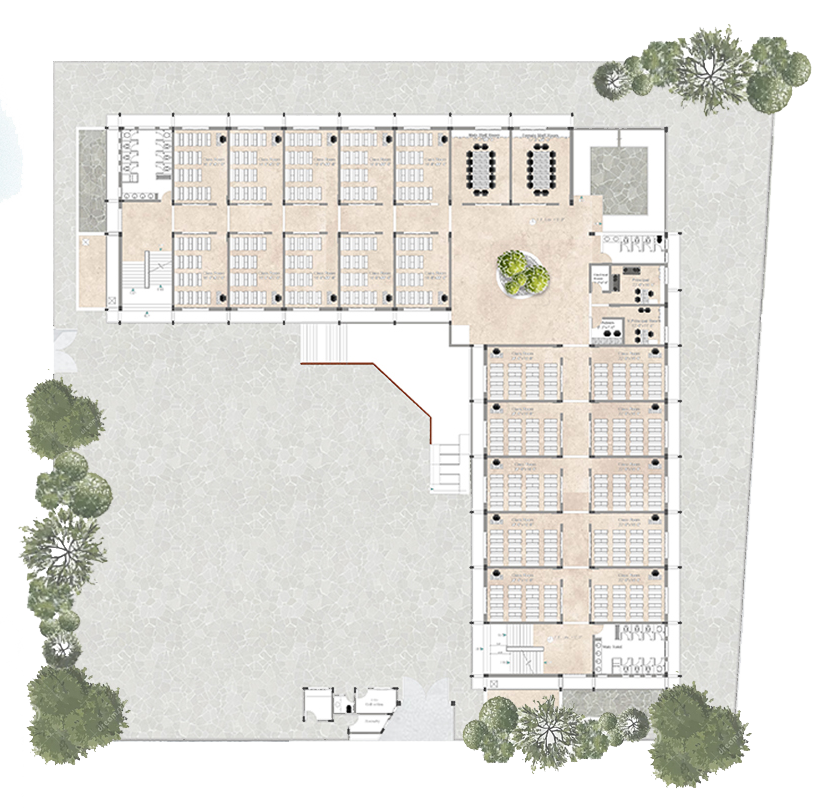
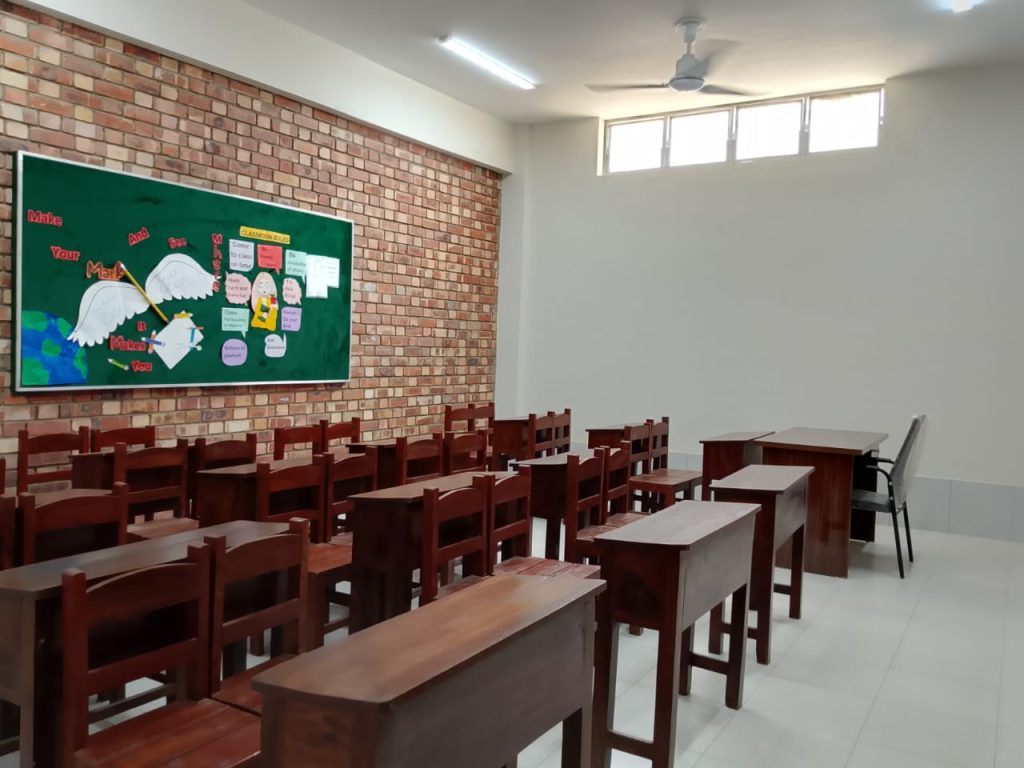
At its heart, the design is shaped around students. The spaces range in scale and function—places to learn, play, interact, and connect with their teachers, peers, and environment. The classrooms are sized generously, each oriented to maximize daylight while minimizing glare. Wide corridors double as informal gathering spaces, shaded and ventilated to encourage interaction beyond the classroom. Breakout areas were introduced at the end of corridors, designed as quiet corners where students can read, collaborate, or simply observe their surroundings.
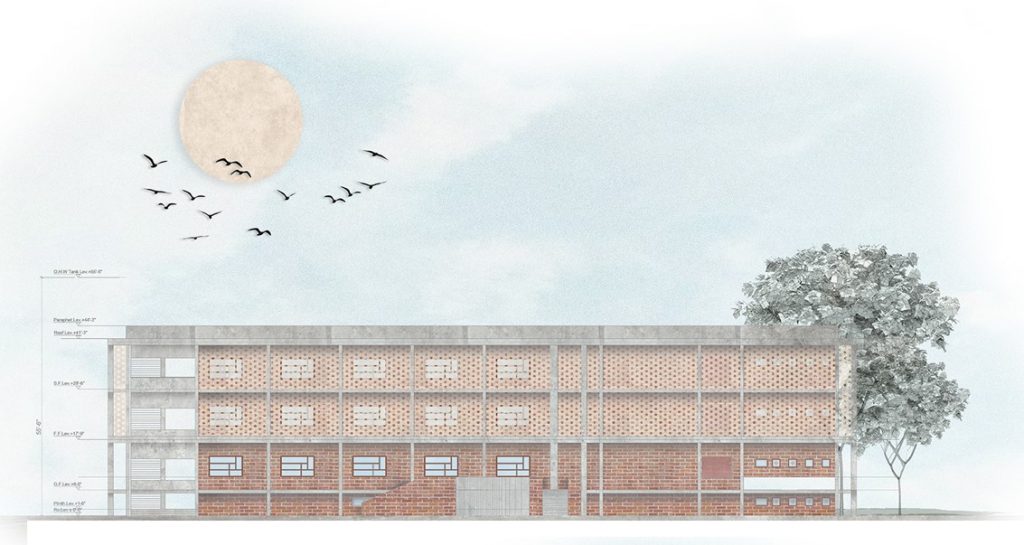
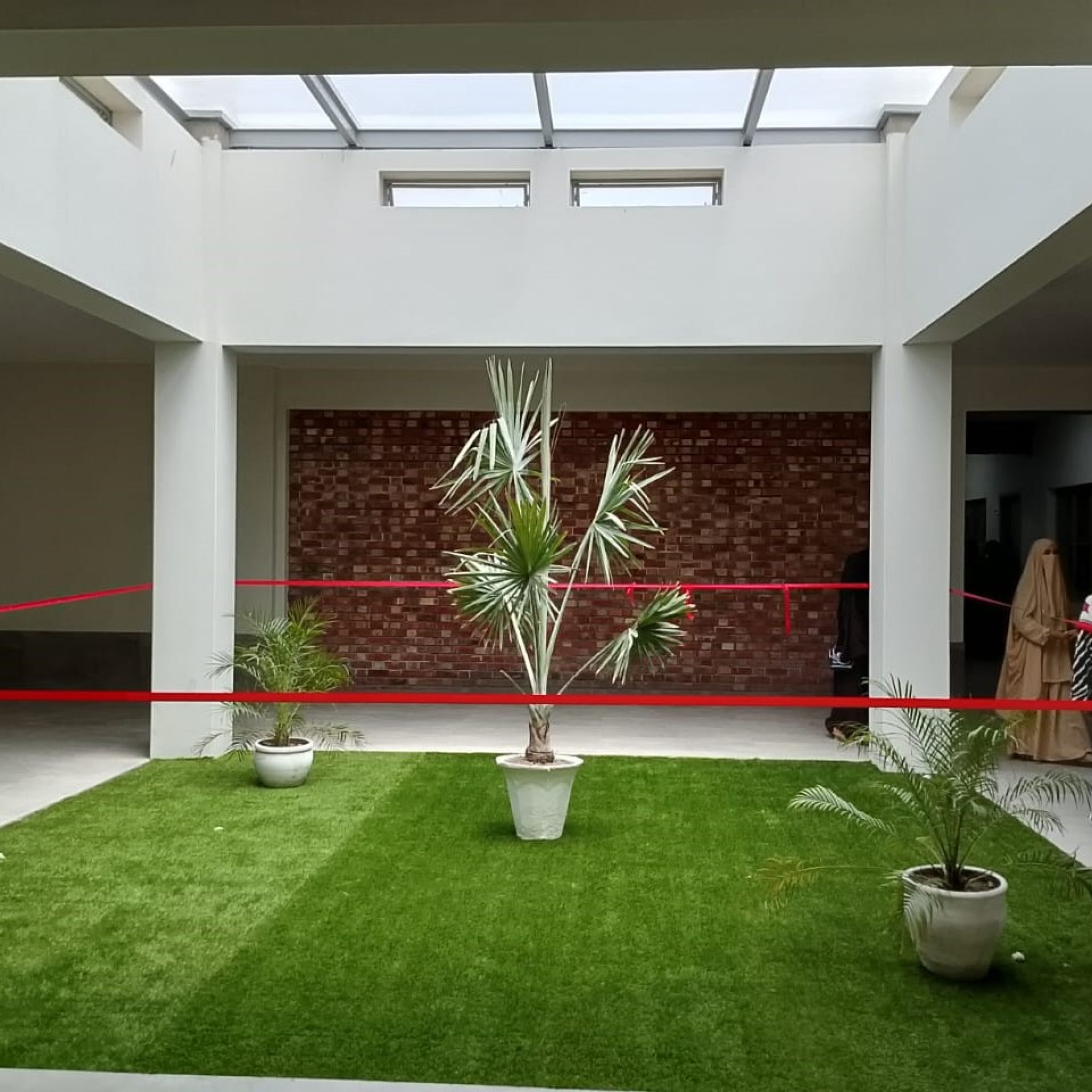
The central courtyard is another key element of the design. It provides light and ventilation to the inner edges of the wings while acting as a collective space for assemblies and community gatherings. The courtyard’s openness is complemented with shaded verandas, which blur the line between inside and outside. These semi-open areas are crucial in a climate like Mehrabpur’s, allowing activities to continue comfortably even in harsh weather.
Special consideration was given to gender-sensitive spaces. While the wings are divided for boys and girls, shared facilities such as the library, laboratories, and multi-purpose hall are centrally located, accessible from both sides. This balances separation with inclusivity, ensuring equal opportunities for all students to benefit from key learning resources.
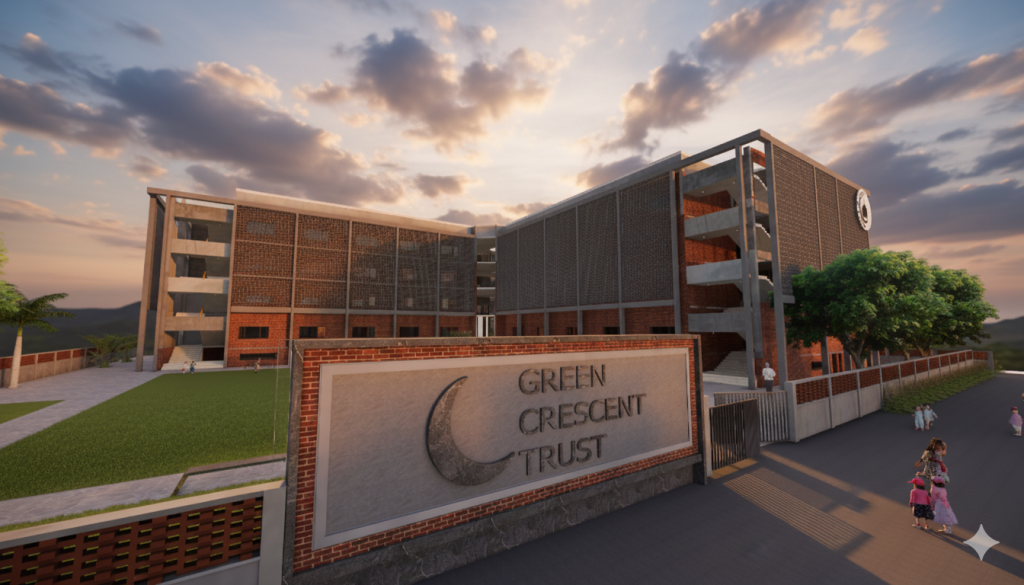
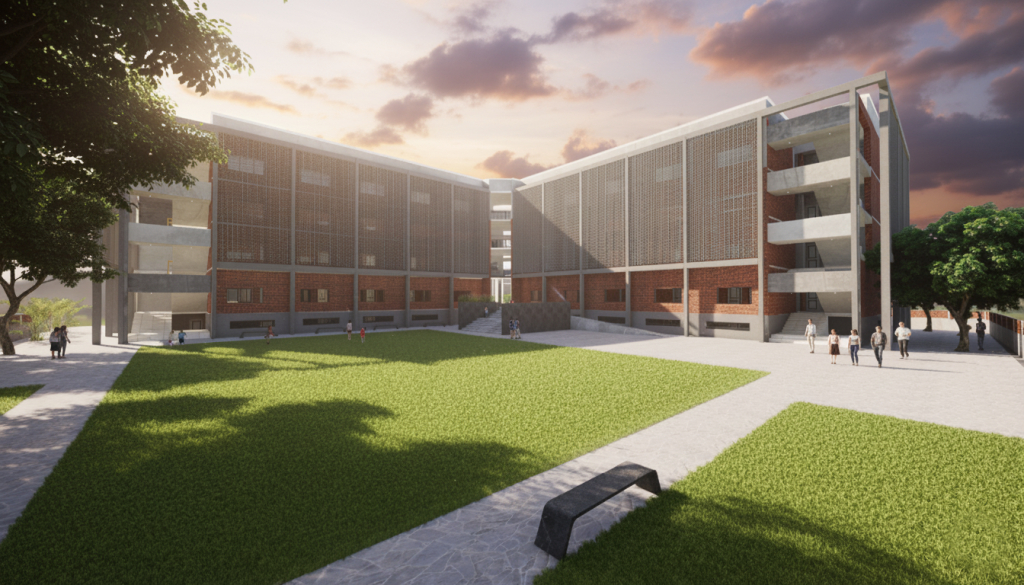
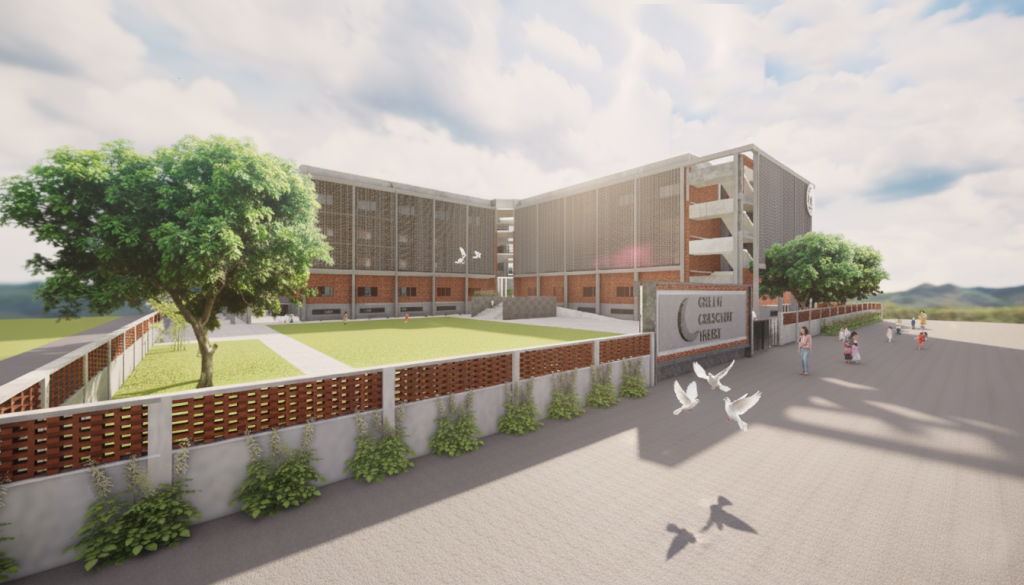
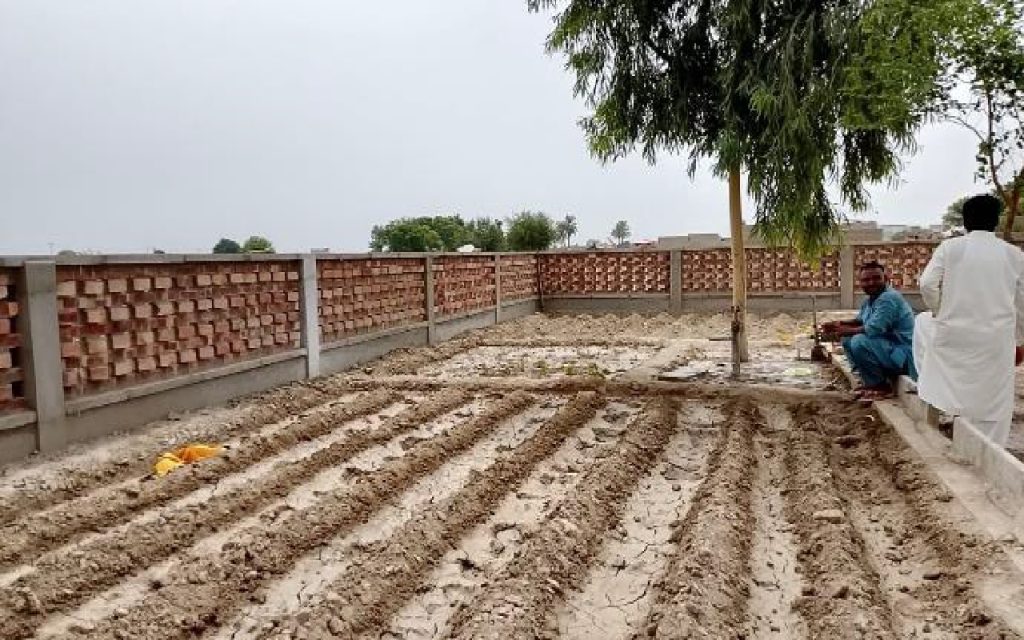
Landscaping carried equal weight in the design. Zahid Saeed, CEO of GCT, directed us to integrate fruit trees, and this became the guiding idea. The grounds were divided into three parts: a line of Sindhri mango trees to provide fruit for students and beyond; clusters of shade and palm trees, regional to the landscape; and a kitchen garden designed as a hands-on learning platform where students could engage with agriculture and nature. Together, these outdoor spaces extend the learning environment beyond the classroom, anchoring the school in its context.
Construction and Choas
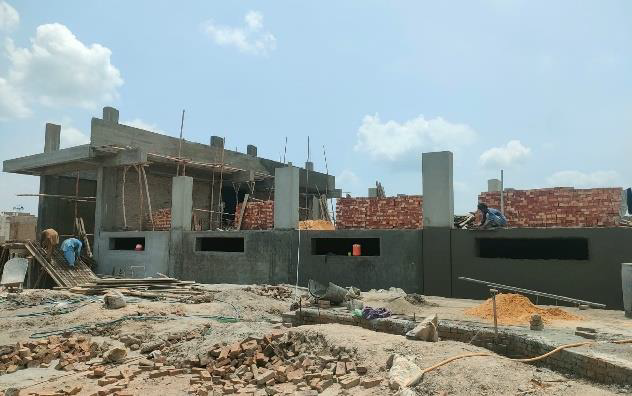
No matter how carefully you plan, construction has its own way of testing you. We knew the site would be difficult—it was a farmland, after all—but we still underestimated the challenges. To avoid massive costs of earth filling, we introduced a basement solution, reducing fill requirements and optimizing the footprint. It was practical and sustainable, but it came with its own trials. Dewatering became a relentless task, made worse by prolonged and heavy monsoon rains. The site would flood, work would halt, and progress slowed to a crawl. Each step forward demanded tough, real-time decisions. To call it “challenging” would be an understatement.
Yet, every hurdle reminded us why this mattered. Every delay carried the weight of the future students this school was meant to serve.
Inaugration and Impact
In August 2025, we proudly inaugurated the first phase. 600 students, previously scattered in makeshift campuses, finally walked into their new classrooms.
The joy on their faces is something I’ll never forget. What made the moment even more powerful was knowing that many of the teachers welcoming them were GCT graduates themselves—living proof of the cycle of change that thoughtful education creates.
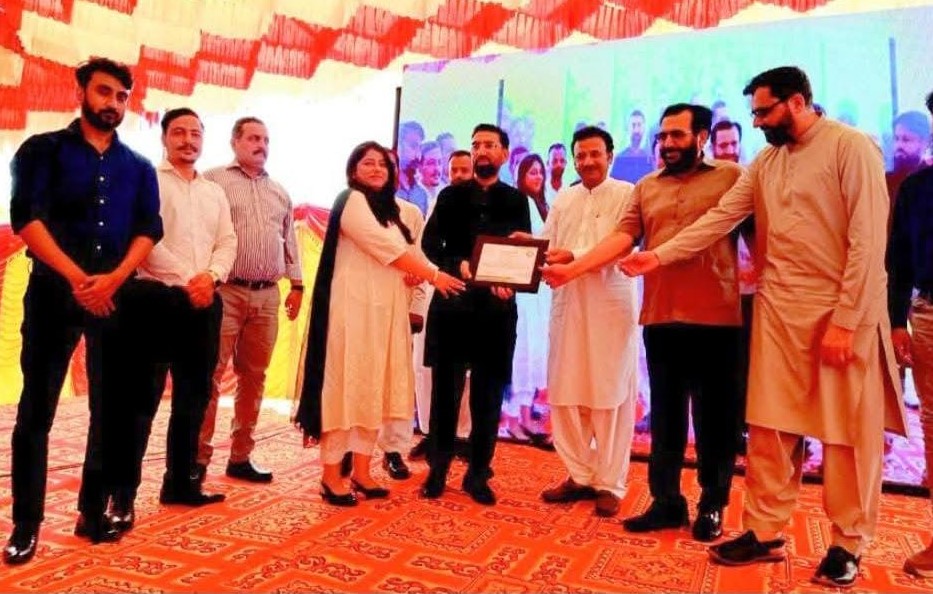
Though, we still have three floors to go, the first steps have already transformed lives. As architects, we often speak about design and space—but here, it’s about hope, dignity, and opportunity. And as my mentor always says:“apna hissa dhalna hai”—we each have to give our bit. With GCT, I’ve seen how even that little bit can change entire future
Project Team
Client:Green Crescent Trust – Mr. Zahid Saeed, Mr. Saad Zia, Mr. Habib Naveed, Mr. Tariq Ishtiaq
Consultants:Arif Shah Private Limited
Principal Architect: Ar. Syed Arif Shah/ Ar. Faiza Lalwani
Project Team: Ar. Ghania Syed, Ar. Areeba Farid, Ar. Safia Saleem, Engr. M. Danish, Engr. Syed Hassan Alam, Engr. Haider Khan, Engr. Zohaib AliÂ
Contractor:NSC Company
Follow us on your favorite platform





Green Crescent Trust is a remarkable organization dedicated to spreading the light of education among underprivileged children in Pakistan. It not only provides access to quality learning but also instills hope, confidence, and a brighter future for those in need. The sincerity, hard work, and commitment of this trust are truly commendable. May their noble efforts continue to grow and bring lasting change in society.”
Indeed, Remarkable service